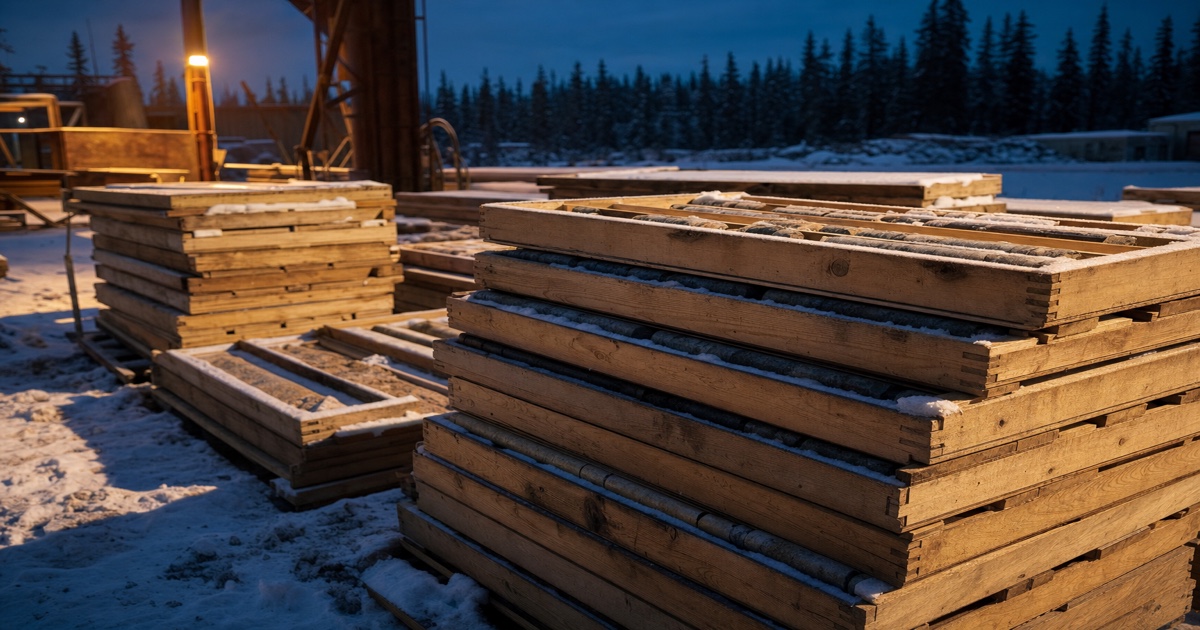
Poor core storage can cost an exploration program far more than the price of a few boxes or racks. Lost intervals, damaged samples, illegible labels, and difficult retrieval lead to wasted field time, duplicated work, and the risk of missing critical geological information. A drill program can generate thousands of metres of core, but the value of that core depends on how well it's stored and organized — whether it's reviewed next month or re-examined ten years from now. Successful core storage comes down to five fundamentals: consistent marking, durable labelling, proper storage conditions, organized stacking, and a digital record system that ties everything together.
The five fundamentals of core storage
A drill program can generate thousands of metres of core, but the value of that core depends entirely on how well it's stored and organized. Whether the core is being reviewed next month or re-examined ten years from now, proper storage practices help preserve geological information, maintain sample integrity, and make future retrieval easier. It comes down to five things:
- Consistent marking — marking blocks throughout each box, not only at the ends.
- Durable labelling — a method chosen for the box's full lifespan.
- Proper storage conditions — dry and shaded matters more than climate control.
- Organized stacking — geometry that keeps any interval retrievable.
- A digital record system — that ties every physical box to its data.
1. Use marking blocks consistently
Marking blocks are one of the simplest and most effective tools for keeping drill core organized. Placed between intervals of core, they identify depths, end-of-run locations, recovery information, and geological notes. Used consistently, they let geologists, technicians, and future project teams locate specific intervals quickly without counting rows of core.
For best results, marking blocks should be placed throughout the box rather than only at the beginning and end of each run. We stock precision-milled marking blocks sized to our standard core box widths — order them with the boxes.
2. Choose labelling methods that last
Core boxes often remain in storage for years or decades. The labelling system should be selected with that lifespan in mind.
| Method | Typical use |
|---|---|
| Pencil on raw wood | Long-term field and library storage |
| Engraved marking blocks | High-value projects and archives |
| Metal tags | Permanent identification |
| Printed labels | Indoor storage environments |
| Marker | Temporary field use |
Labels should remain legible throughout the life of the project and be visible whether boxes are stored individually, stacked, or placed in racks.
3. Protect core from moisture and sunlight
Long-term core preservation does not necessarily require a climate-controlled building. For most exploration programs, the priority is keeping core dry and protected from direct weather exposure. Covered storage, good drainage, and protection from standing water are often more important than maintaining a specific temperature.
Repeated wetting and drying cycles can damage both labels and wooden storage boxes over time. A dry, shaded storage environment helps maximize the lifespan of both the core and the boxes containing it.
4. Organize stacks for long-term access
Core that cannot be easily retrieved has limited value. Boxes should be stacked in a way that allows individual drill holes and intervals to be located without moving large portions of the library.
As storage volumes increase, many operations transition from ground stacks to dedicated core racks. Proper rack systems improve accessibility, reduce handling damage, and distribute weight more evenly across stored boxes — for long-term storage facilities, racking is often the most efficient solution.
5. Maintain a digital record system
Physical organization and digital organization should work together. Each box should be linked to a drill hole ID, interval range, and storage location. Many projects use spreadsheets, databases, barcodes, or QR systems to track inventory. At a minimum, a record should include:
- Drill hole ID
- Box number
- Depth interval
- Storage location
- Project name
- Date logged
A well-maintained digital record system ensures core can be located years after the original drilling program is complete.
Core boxes and marking blocks for Canadian exploration
Greg's Manufacturing supplies core boxes and marking blocks to exploration and mining projects across Canada from Cranberry Portage, Manitoba. Standard NQ and HQ core boxes are available year-round, with custom AQ, BQ, HQ, and PQ configurations available for specialized programs.
Planning a drilling program or building a new core library? Send us your metreage, drill size, and delivery location, and we'll recommend the appropriate core box and marking block configuration for your project. Reach us through our contact page, or see box sizes, specs, and shipping details on the wooden core boxes Canada page.
Frequently asked questions
How should drill core be labelled so it lasts?
Core boxes often remain in storage for years or decades, so the labelling system should be selected with that lifespan in mind. Common options include pencil on raw wood (long-term field and library storage), engraved marking blocks (high-value projects and archives), metal tags (permanent identification), printed labels (indoor storage environments), and marker (temporary field use). Labels should remain legible throughout the life of the project and be visible whether boxes are stored individually, stacked, or placed in racks.
What temperature and humidity does drill core need for storage?
Long-term core preservation does not necessarily require a climate-controlled building. For most exploration programs, the priority is keeping core dry and protected from direct weather exposure. Covered storage, good drainage, and protection from standing water are often more important than maintaining a specific temperature. Repeated wetting and drying cycles can damage both labels and wooden storage boxes over time, so a dry, shaded environment helps maximize the lifespan of both the core and the boxes.
How should core boxes be stacked for long-term access?
Core that cannot be easily retrieved has limited value. Boxes should be stacked so individual drill holes and intervals can be located without moving large portions of the library. As storage volumes increase, many operations transition from ground stacks to dedicated core racks, which improve accessibility, reduce handling damage, and distribute weight more evenly across stored boxes.
What information should be kept for each core box?
Physical and digital organization should work together. Each box should be linked to a drill hole ID, interval range, and storage location, tracked in spreadsheets, databases, barcodes, or QR systems. At a minimum, a record should include the drill hole ID, box number, depth interval, storage location, project name, and date logged — so core can be located years after the original drilling program is complete.
What is the most effective tool for keeping core organized?
Marking blocks. Placed between intervals of core, they identify depths, end-of-run locations, recovery information, and geological notes. Used consistently — throughout the box rather than only at the beginning and end of each run — they let geologists, technicians, and future project teams locate specific intervals quickly without counting rows of core.
Need a quote on a real drilling program?
Tell us your meterage, your bit size, and your timeline. We'll come back with a real number — usually the same day.
Get a quote