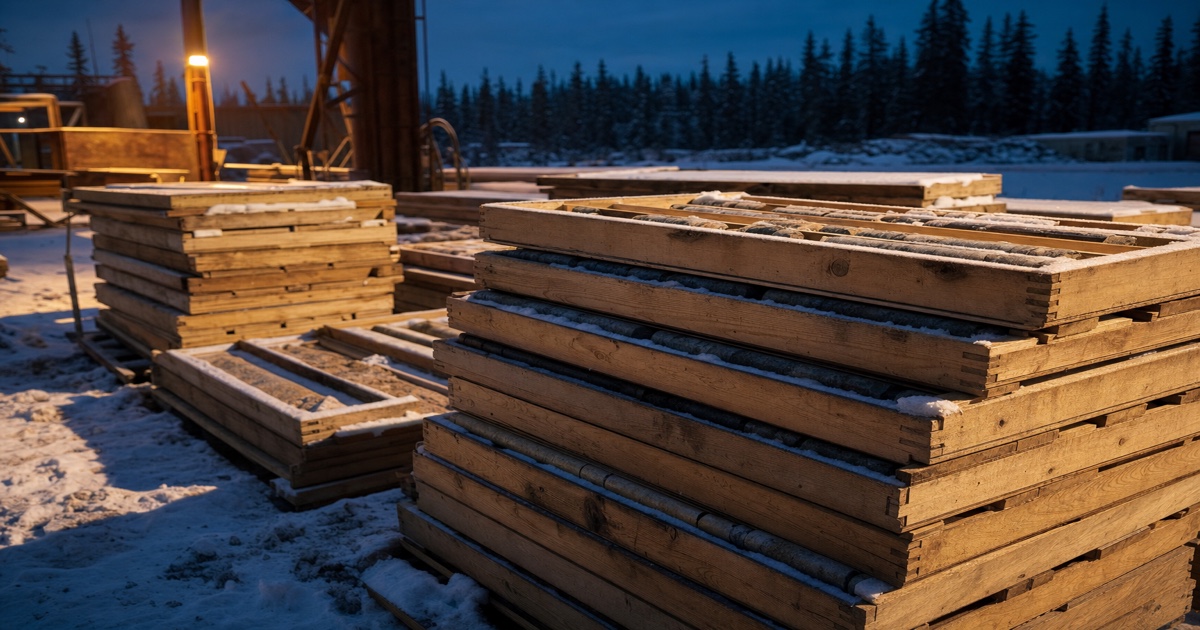
Our Canadian-made wood core boxes outperform imports in cold-weather exploration because they're built for the conditions they'll actually face. Across Northern Manitoba, Saskatchewan, Ontario, Yukon, and Nunavut, core boxes are exposed to freeze-thaw cycles, heavy snow loads, rough handling, and years of outdoor storage. In those environments, lumber quality, construction methods, and supply reliability matter just as much as purchase price. While imported core boxes may suit some applications, exploration programs operating in the Canadian Shield often need products designed specifically for northern climates — and the difference usually comes down to three factors: lumber quality, structural durability, and supply chain reliability.
Built for the conditions they'll actually face
Across Northern Manitoba, Saskatchewan, Ontario, Yukon, and Nunavut, core boxes are exposed to freeze-thaw cycles, heavy snow loads, rough handling, and years of outdoor storage. In these environments, lumber quality, construction methods, and supply reliability become just as important as purchase price.
While imported core boxes may be suitable for some applications, exploration programs operating in the Canadian Shield often require products designed specifically for northern climates. The difference usually comes down to three factors: lumber quality, structural durability, and supply chain reliability.
1. Kiln-dried lumber performs better in cold climates
Wood naturally expands and contracts as moisture levels change. When lumber is properly kiln-dried before manufacturing, it is less likely to warp, twist, or check during storage and transportation.
Our core boxes are manufactured from kiln-dried Canadian spruce, which helps maintain dimensional stability throughout their service life. Whether boxes are stored indoors, stacked on a drill site, or archived outdoors, stable lumber contributes to longer-lasting performance — a meaningful edge over plastic core boxes and over imports milled for warmer climates.
2. Heavier construction improves long-term durability
Not all core boxes are designed for the same conditions. Plywood core boxes are lighter and commonly used for indoor storage, core shacks, short-term exploration programs, and projects where core will be scanned, sampled, and archived within a single season.
For long-term outdoor storage, many exploration companies choose solid-construction 2×6" and 2×8" core boxes. Their heavier construction provides greater rigidity, improved stacking strength, and better resistance to handling damage in demanding field conditions.
| Construction | Typical application |
|---|---|
| Plywood | Indoor storage and short-term programs |
| 2×6" framed | Standard NQ and HQ exploration programs |
| 2×8" framed | Heavy stacking and long-term outdoor storage |
| Custom PQ | Large-diameter core and metallurgical drilling |
For many exploration projects across Canada, 2×6" and 2×8" core box construction remains the preferred choice because it balances durability, weight, and cost.
3. Domestic supply reduces project delays
Drilling programs rarely go exactly as planned. Additional metreage, program expansions, lost core, and schedule changes can all increase box requirements during a project.
A domestic manufacturing source provides faster access to additional inventory when requirements change. Standard NQ and HQ core boxes are kept in production throughout the year, making it easier to supply additional quantities when drilling programs expand or schedules accelerate.
Built for Canadian exploration
Greg's Manufacturing has been manufacturing core boxes in Cranberry Portage, Manitoba for decades. The same conditions faced by exploration programs across the Canadian Shield are the conditions our products are designed to withstand.
Our focus is straightforward: manufacture durable core boxes using kiln-dried Canadian lumber, maintain consistent production capacity, and provide reliable delivery to exploration and mining projects across Canada.
Need core boxes for an upcoming program?
Send us your planned metreage, drill size (AQ, BQ, NQ, HQ, or PQ), and delivery location. We'll recommend the appropriate core box configuration, provide current lead times, and typically return a quote within one business day. Reach the shop through our contact page or see the full CanadaCoreBox lineup or get sizes, specs, and a same-day quote on our wooden core boxes Canada page.
Frequently asked questions
Why do Canadian-made wooden core boxes outperform imports in cold weather?
Because they're built for the conditions they'll actually face. Across Northern Manitoba, Saskatchewan, Ontario, Yukon, and Nunavut, core boxes are exposed to freeze-thaw cycles, heavy snow loads, rough handling, and years of outdoor storage. In those environments, lumber quality, construction methods, and supply reliability matter just as much as purchase price. The difference usually comes down to three factors: lumber quality, structural durability, and supply chain reliability.
Why does kiln-dried lumber perform better in cold climates?
Wood naturally expands and contracts as moisture levels change. When lumber is properly kiln-dried before manufacturing, it is less likely to warp, twist, or check during storage and transportation. Our core boxes are manufactured from kiln-dried Canadian spruce, which helps maintain dimensional stability throughout their service life — whether boxes are stored indoors, stacked on a drill site, or archived outdoors.
Should I use plywood or framed core boxes for long-term outdoor storage?
Plywood core boxes are lighter and commonly used for indoor storage, core shacks, short-term exploration programs, and projects where core will be scanned, sampled, and archived within a single season. For long-term outdoor storage, many exploration companies choose solid-construction 2×6" and 2×8" core boxes, whose heavier construction provides greater rigidity, improved stacking strength, and better resistance to handling damage in demanding field conditions.
How does domestic supply reduce project delays?
Drilling programs rarely go exactly as planned — additional metreage, program expansions, lost core, and schedule changes can all increase box requirements during a project. A domestic manufacturing source provides faster access to additional inventory when requirements change. Standard NQ and HQ core boxes are kept in production throughout the year, making it easier to supply additional quantities when programs expand or schedules accelerate.
Need a quote on a real drilling program?
Tell us your meterage, your bit size, and your timeline. We'll come back with a real number — usually the same day.
Get a quote